When Russia invaded Ukraine in 2022, food prices soared. For Henry Dobson and Akiko Matsuda, it was the trigger to establish Moss, a restaurant in Edinburgh that makes as much as it can itself and sources the rest from small-scale local producers or Henry’s family farm. The idea was to detach from the instability of global systems and their pricing havoc, and instead to build resilience and mutual support through a closer relationship with their immediate surroundings and communities.
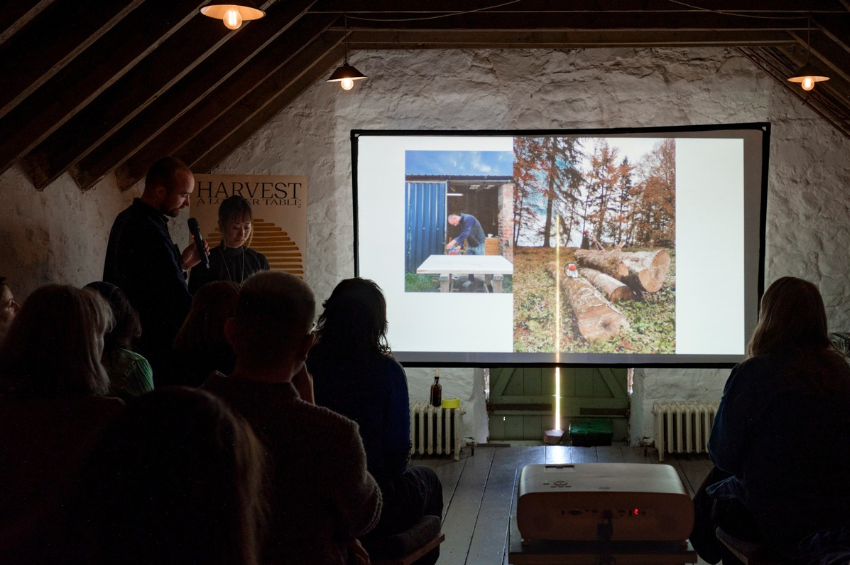
Four years on, the world feels, if anything, even more unstable. In that context, it no longer seems possible to separate questions of work and creative practice from those about everyday life and the world at large. That was the recurring theme at Harvest: A Longer Table, the gathering hosted in September by Craft Scotland, where Henry and Akiko joined a range of speakers invited by Creative Director Stacey Hunter to present their work to a community of makers from across Scotland.
Each showed how the work of craftspeople intersects with bigger questions: the global systems and conflicts that affect living costs; the environmental crises that dictates which materials are available or viable; and a changing information landscape that is forcing us to scrutinise what we value about human intelligence and creativity.
Moving from the macro to the micro, the speakers addressed both the urgency of the moment and how they have harnessed their skills to create a sense of agency in difficult times. As the day progressed, it became clear that many of the ideas that feel most critical at this political juncture – localism, resourcefulness and resilience – are ones makers have centred all along. Could the values we associate with craft offer a roadmap for navigating an uncertain future?
For the duo behind Moss, the self-imposed restriction of sourcing locally brings challenges of adaptation, but also opportunities. “The price of venison doesn’t go up and down in the same way that beef does, for example, so our costs have been a lot more stable than many of our friends in the industry,” Henry says. “I’d massively recommend finding ways to shorten your supply chain for that reason alone.” The restaurant is a project that highlights something that, over lunch Fiona Richmond, head of regional food at Scotland Food & Drink, drew out more explicitly: the close link between the food and craft industries – from the local small businesses that sustain both to the value of provenance – and what they can learn from one another.
Like Moss, Rosie Bristow’s Fantasy Fibre Mill grew out of a desire to reject a flawed global system – in her case, the garment industry. After years as a costume designer, she set out to grow her own clothes. “I started off trying to grow flax, which makes linen, but quickly realised that there’s no processing equipment available anywhere in the UK to turn raw straw into linen yarn,” she says. The answer was to develop processing machinery from scratch, with an open-source plan that would be manageable and affordable for farmers and artisans to work with local materials – “something you could DIY build at home, using off the shelf parts and materials that are quite easy to get hold of, and processes like woodworking and 3D printing”.
Both Moss and Fantasy Fibre Mill address a fundamental reality of today’s complex world: the difficulty of tracing and controlling the things we depend on most. Shona Cameron took that interconnectedness as her starting point – again through food. “It’s not just about what we eat, but also the landscape and seascapes that produce it, the materials and processes involved, the waste it creates, the skills and infrastructures that support it, and the people and relationships that make it possible,” she said, describing the far-reaching impact of the simple act of consumption.
Cameron directs the Skye and Raasay station of CLIMAVORE, the initiative founded by Turner Prize-nominated duo Cooking Sections to rethink how our food habits need to change as the climate does. Her talk explained its work to imagine regenerative alternatives to the industrial salmon farming that surrounds the islands. For her, part of the answer lies in craft. “What if making can also be a way of regenerating reciprocal relationships between people, materials, knowledge and play?” she asked. One strand of the project uses discarded seafood shells that would otherwise go to landfill as a material. “What if the shell isn’t just the end of the food system, but the beginning of something else?” she asked. The result of those experiments has been 10 large-scale murals made from crushed seashells.
Textile artist and gardener Eilidh Weir articulated our dependence on nature through a different lens. “Supermarket conglomerates and seed giants have reduced and controlled varieties of fruit, veg and grains across the globe, but the future of our food security depends on returning to open-pollinated and seed-saving traditions,” she says. Key to growing good-quality food is soil health, which depends on “a vast community of invertebrates, microbes, bacteria and fungi who work together under our feet, recycling nutrients and improving soil structure in a way that no synthetic fertiliser can”. Weir has long been inspired by such creatures, which feature on the quilted artworks she makes out of discarded materials. For her latest project, Hedgerowsexual, she is starting by learning traditional hedge-laying techniques that nurture biodiversity – a process that will one day inspire a new quilt.
Copenhagen-based textile designer and material researcher Alberte Holmø Bojesen looks to another ecosystem: the ocean. “Macro algae create nourishment, shelter, breeding and feeding spaces for thousands of other marine species,” she says. She works with seaweed as a natural dye and a material, but is equally interested in what gathering it does for communities that live by the sea. “I see my material as a collaborator,” she says. “The interaction between human and nature, and the knowledge of traditions, uses of material and stories is super important.”
Back on Skye, furniture maker and sculptor Laura Welsh takes a similarly collaborative approach to the island’s wood supply, responding to the difficult conditions its trees face – conditions that affect how they grow, “which shows up in the timber”. With supply limited, the scale and shape of her work is partly determined by the size and state of the trees she ends up with. “One piece of elm had quite a large area of decay in the middle, and some burrs along the edge,” she says, “so I carved the burrs into beads that I placed along a ring to slip down and form a giant necklace.”
That willingness to relinquish control was taken furthest by the day’s final speaker, “anti-disciplinary” artist Morven Mulgrew. Her practice has evolved from traditional shoemaking to one that spans pottery, sculpture, costume and performance. She once strove for perfection: “I wanted to be an expert master. I wanted to be perfect at everything. I wanted to be the best.” Then, a series of difficult life events challenged her assumptions that mastery was the ultimate goal – noting the privilege and perfect set of circumstances it requires to allow you to achieve that. Her answer is “first-timerism”: “You don’t need to be good the first time you do something,” she told the audience. “I have to believe there is quality to uncertain, unfinished, unpolished work. Maybe then the audience also then feels they are in the making process. It’s an ending to the day’s conversations that invited us to consider our own ability to act without hesitation even in the most tumultuous of times.
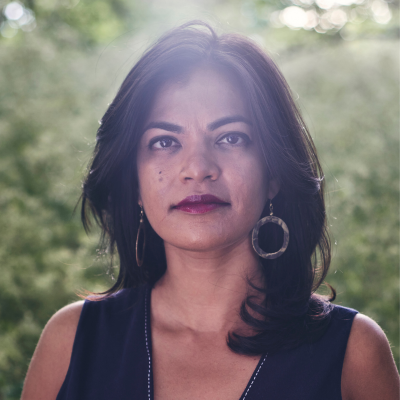
Debika Ray is the guest moderator for HARVEST: A Longer Table. She is a journalist and editor specialising in culture, systems and the material world. She has written for the Financial Times, Kinfolk, Apollo, the World of Interiors, Wallpaper and many others. She was previously editor of Crafts magazine, head of editorial at Crafts Council UK and director of the Global Design Forum at the London Design Biennale. She founded the consultancy Clove Press, which strives to generate inclusive, globally-minded, critical conversations about the arts. She frequently chairs public conversations, delivers lectures and participates in juries and interview panels, as well as advising businesses and institutions on their creative strategies.
Read More
-
Full details→
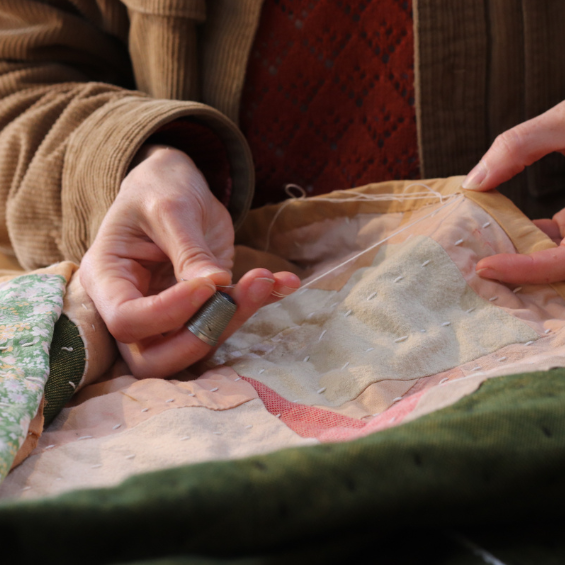
Essay Meet the Speakers at HARVEST: A Longer Table
Discover more about the inspiring practices of our speakers at Harvest: A Longer Table, a new summit for contemporary craft makers.
16 Sep 2026
-
Full details→
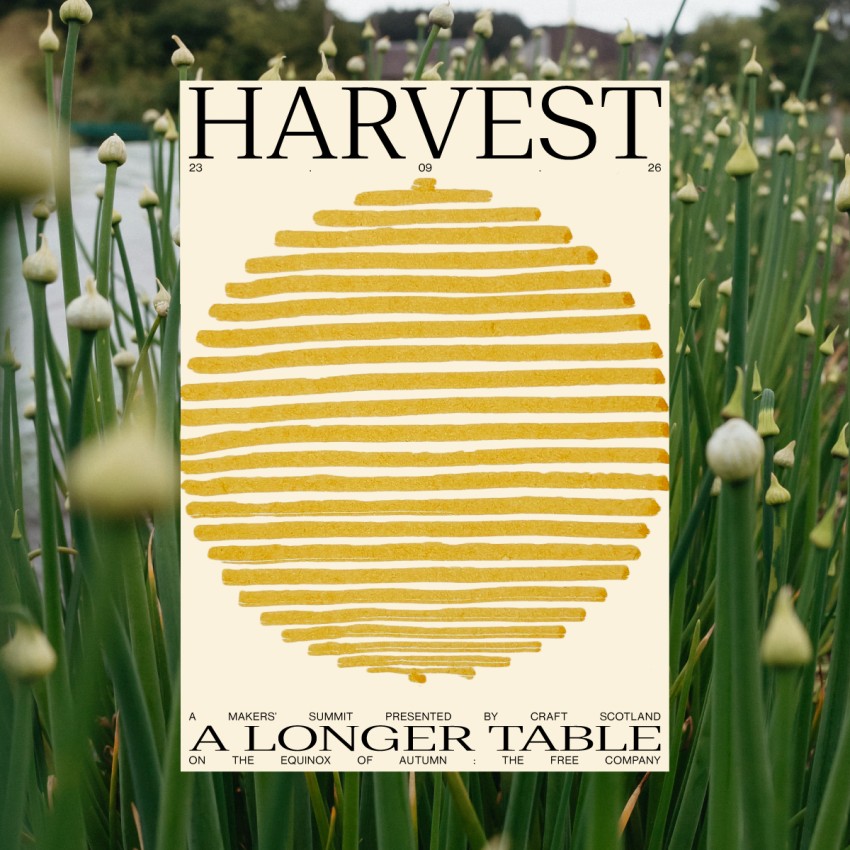
Essay HARVEST: A Longer Table, 'A Fine Balance' by Debika Ray
Discover more about the origins of and intention behind Craft Scotland's new summit for contemporary craft makers, in an essay by Debika Ray.
27 Aug 2026
-
Full details→
![Meet the Speakers at HARVEST: A Longer Table]()
Essay Meet the Speakers at HARVEST: A Longer Table
Discover more about the inspiring practices of our speakers at Harvest: A Longer Table, a new summit for contemporary craft makers.
16 Sep 2026
-
Full details→
![HARVEST: A Longer Table, 'A Fine Balance' by Debika Ray]()
Essay HARVEST: A Longer Table, 'A Fine Balance' by Debika Ray
Discover more about the origins of and intention behind Craft Scotland's new summit for contemporary craft makers, in an essay by Debika Ray.
27 Aug 2026