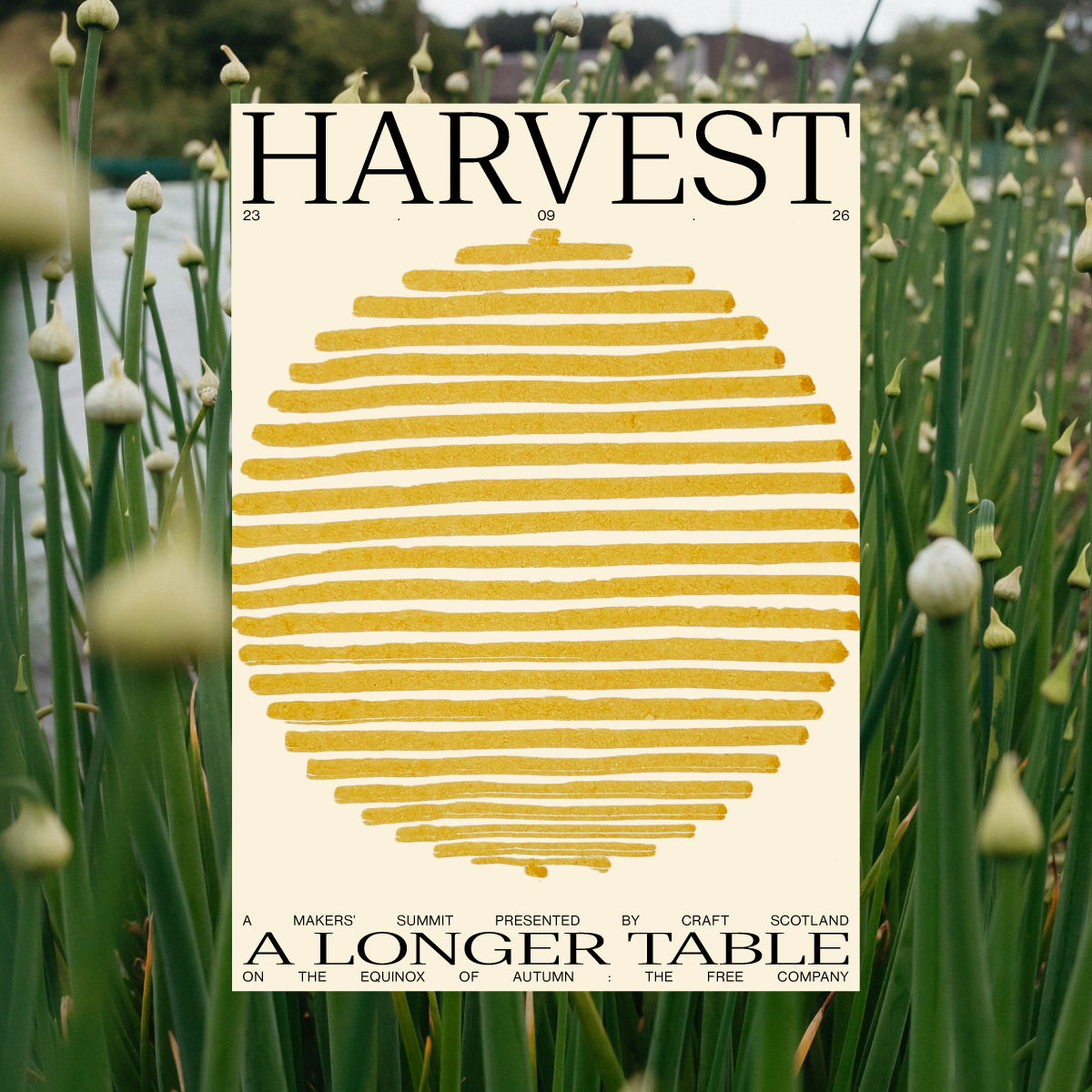
On 23 September 2026, the northern hemisphere will wake up to the official start of autumn: the equinox, when the sun crosses directly above the equator and day and night are almost equal in length everywhere on earth. Three days later, the same axial tilt responsible for that phenomenon means the full moon rises at a similar time for several nights in a row in the northern latitudes. It’s called the Harvest Moon: a run of consecutive well-lit evenings that once let farmers confidently work until late in the fields and bring in their crops after sunset.
The day of the autumn equinox is also when a community of makers will gather at The Free Company, a regenerative farm and restaurant on the outskirts of Edinburgh, for Harvest: A Longer Table, a celebration of contemporary craft and the ways in which it relies on and draws from the earth and tends to it in return. Over the course of a day, attendees will eat and drink together, hear from and converse with a range of fellow makers, pioneering thinkers and practitioners, and make use of their hands and minds through workshops and tours of a place rooted in the ideas of a closed-loop system that restores the soil, supports biodiversity and strengthens resilience for the land and those who care for it.
The origins of the summit lie in Craft Scotland’s contemporary craft fair, HARVEST, which took place at the City Art Centre in the Scottish capital in 2025. This event, devised by Creative Director Stacey Hunter, brought together 80 innovative makers working across jewellery, furniture, lighting, ceramics, textiles, glass and basketry. What emerged for makers, says Stacey, was the value of that moment not just for presenting work, but for connecting with like-minded people. A Longer Table was born out of that – it will be an arena for exchange, reflection and learning between peers that sustains the ethos of the harvest, with its connotations of care, patience, collaboration and circularity.
The title is inspired by an idiom – “if you have more than enough for yourself, build a longer table, not a higher wall” – popularised by José Andrés, a Spanish-American chef and founder of the humanitarian organisation World Central Kitchen, which feeds people in the aftermath of conflict and natural disaster. At a time of heightened political division and anti-immigration rhetoric, it’s a call to transcend differences through generosity and connection.
The context here is less fraught, but it has its own urgencies. Craft Scotland report that for many makers, creative practice can feel like a relentless churn of production and sales, in which open-ended in-person encounters that foster friendship, support and inspiration can feel like a luxury. But the act of coming together across geographical, economic, disciplinary and institutional boundaries is not just personally nourishing, but critical – at a moment when we are increasingly alienated from each other, from the land and from seasons, by economic precarity, social and political upheaval, environmental degradation and unfettered technological change.
The folklore and traditions around autumn are diverse – from China’s Mooncake festival of togetherness that marks the goddess Chang'e’s ascent to the moon with sweet pastries, to the post-monsoon Hindu festival of Sharad Navratri, nine nights that culminate in the triumph of good over evil, to the Igbo New Yam Festival, an opportunity to give thanks for a successful harvest. Hebridean Michaelmas or Latha Fhéill Mìcheil, draws on both pagan and Christian influences and was historically celebrated with a cavalcade on horseback. It’s not all unambiguously positive, though. In Greek mythology, Persephone’s descent to the underworld marks the arrival of autumn as vegetation withers in despair at her absence. Samhainn, an ancient Celtic festival that divided the year between the light and the dark half (known as Samhain in Irish and Sauin in Manx), was the celebration of the end of the harvest and a time where the boundary between our world and the Otherworld would become weaker allowing the souls of dead ancestors and fairies to roam.
In that context, the aim of coming together is not to pretend that gathering will solve our problems, but to respond to the moment – holding light and dark, and the liminality that comes with every equinox, in tension, and convening because of, not in spite of, challenges. Craftspeople know, as farmers do, that the balance between abundance and scarcity, tradition and experimentation, the individual and the collective is delicate – and how vital it is that we all understand and work with these.
There is value in conversation alone, but we hope that A Longer Table will also offer insights, through a series of presentations by pioneering individuals who use craft as a springboard to radically rethink the systems that shape our lives.
While so much may currently feel out of kilter, there’s hope: when you leave a table – it’s not just the end of a meal, but the beginning of the relationships that started there. In this case, these conversations are one point on a continuing journey of testing, scaling and spreading ideas, and the evolution that happens as they pass from person to person. After all, transforming material economies, supply chains and networks of solidarity is slow and deliberate work that, more often than not, remains perpetually unfinished. After the event, under the bright light of the harvest moon, the work continues.

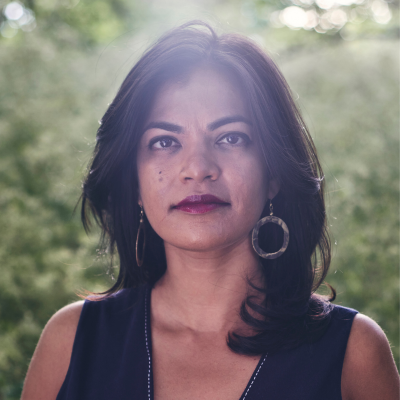
Debika Ray is the guest moderator for HARVEST: A Longer Table. She is a journalist and editor specialising in culture, systems and the material world. She has written for the Financial Times, Kinfolk, Apollo, the World of Interiors, Wallpaper and many others. She was previously editor of Crafts magazine, head of editorial at Crafts Council UK and director of the Global Design Forum at the London Design Biennale. She founded the consultancy Clove Press, which strives to generate inclusive, globally-minded, critical conversations about the arts. She frequently chairs public conversations, delivers lectures and participates in juries and interview panels, as well as advising businesses and institutions on their creative strategies.
Recent Articles
-
Full details→
![Help Save Undergraduate Craft Programmes at ECA: Write to your MSP]()
Advocacy Help Save Undergraduate Craft Programmes at ECA: Write to your MSP
Join the campaign to reverse the closure of undergraduate Jewellery and Silversmithing, Textiles and Performance Costume Programmes at Edinburgh College of Art.
6 Oct 2026
-
Full details→
![Open Letter Addressing the Closure of Craft Courses at Edinburgh College of Art]()
Advocacy Open Letter Addressing the Closure of Craft Courses at Edinburgh College of Art
Craft Scotland along with organisations and leaders across the craft sector call for the reinstatement of undergraduate craft degrees at Edinburgh College of Art.
21 Sep 2026
-
Full details→
![Meet the Speakers at HARVEST: A Longer Table]()
Essay Meet the Speakers at HARVEST: A Longer Table
Discover more about the inspiring practices of our speakers at Harvest: A Longer Table, a new summit for contemporary craft makers.
16 Sep 2026
-
Full details→
![95 of Scotland's Makers Supported by Inches Carr Awards]()
News 95 of Scotland's Makers Supported by Inches Carr Awards
As the Inches Carr Craft Awards Programme moves towards its final years, we're looking back on the many past awardees.
26 Aug 2026
-
Full details→
![What's On In Craft This Edinburgh Festival Season]()
The Craft Edit What's On In Craft This Edinburgh Festival Season
4 Aug 2026
-
Full details→
![Degree Shows 2026]()
New Talent Degree Shows 2026
28 May 2026
-
Full details→
![Programme Update: Spring 2026]()
Announcement Programme Update: Spring 2026
Find out about exciting new opportunities for makers and updates about our programme for 2026.
30 Apr 2026
-
Full details→
![The Craft Edit March 2026]()
The Craft Edit The Craft Edit March 2026
Here at Craft Scotland we’re looking towards Spring and celebrating news and achievements from across Scotland’s craft sector. Read on to discover the latest awards, announcements, publications and projects.
23 Mar 2026
-
Full details→
Advocacy Help Save Undergraduate Craft Programmes at ECA: Write to your MSP
Join the campaign to reverse the closure of undergraduate Jewellery and Silversmithing, Textiles and Performance Costume Programmes at Edinburgh College of Art.
6 Oct 2026
-
Full details→
Advocacy Open Letter Addressing the Closure of Craft Courses at Edinburgh College of Art
Craft Scotland along with organisations and leaders across the craft sector call for the reinstatement of undergraduate craft degrees at Edinburgh College of Art.
21 Sep 2026
-
Full details→
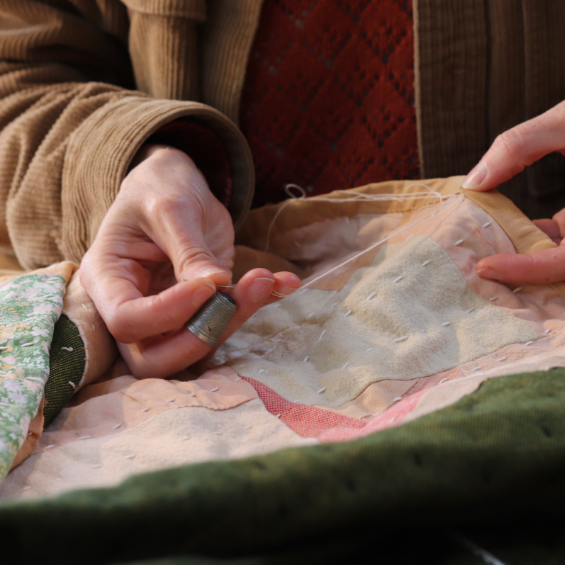
Essay Meet the Speakers at HARVEST: A Longer Table
Discover more about the inspiring practices of our speakers at Harvest: A Longer Table, a new summit for contemporary craft makers.
16 Sep 2026
-
Full details→
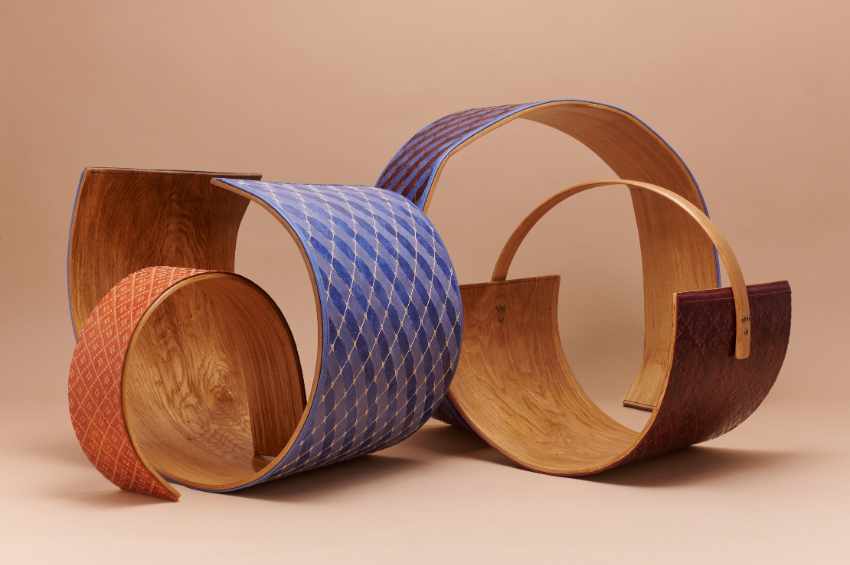
News 95 of Scotland's Makers Supported by Inches Carr Awards
As the Inches Carr Craft Awards Programme moves towards its final years, we're looking back on the many past awardees.
26 Aug 2026
-
Full details→
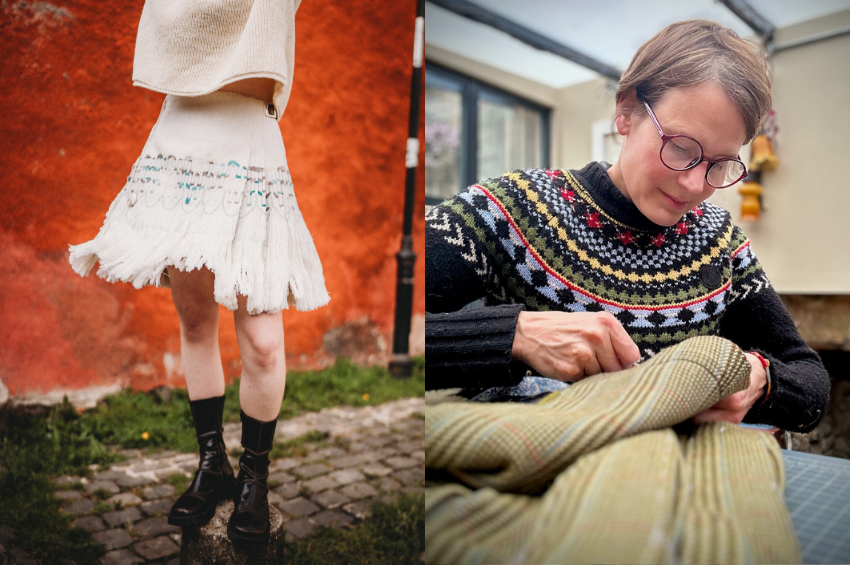
The Craft Edit What's On In Craft This Edinburgh Festival Season
4 Aug 2026
-
Full details→
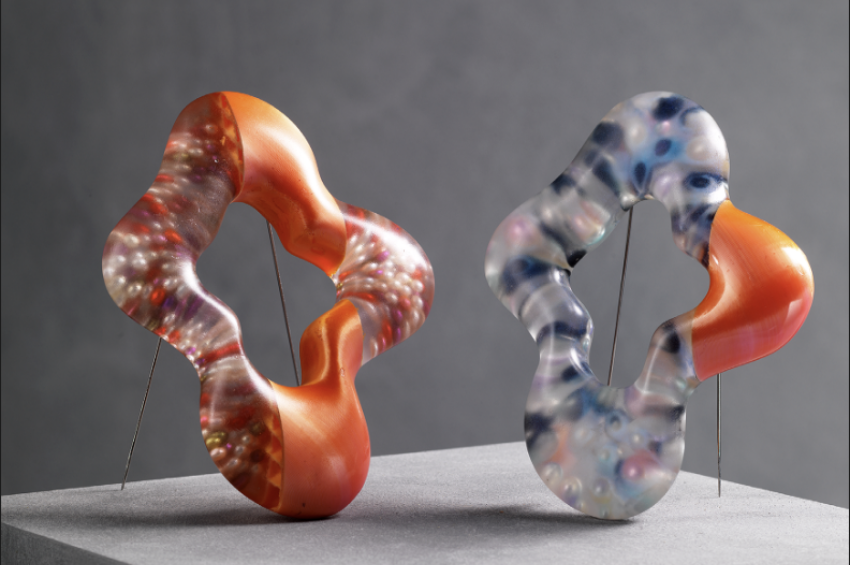
New Talent Degree Shows 2026
28 May 2026
-
Full details→
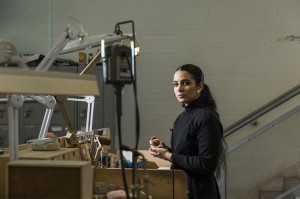
Announcement Programme Update: Spring 2026
Find out about exciting new opportunities for makers and updates about our programme for 2026.
30 Apr 2026
-
Full details→
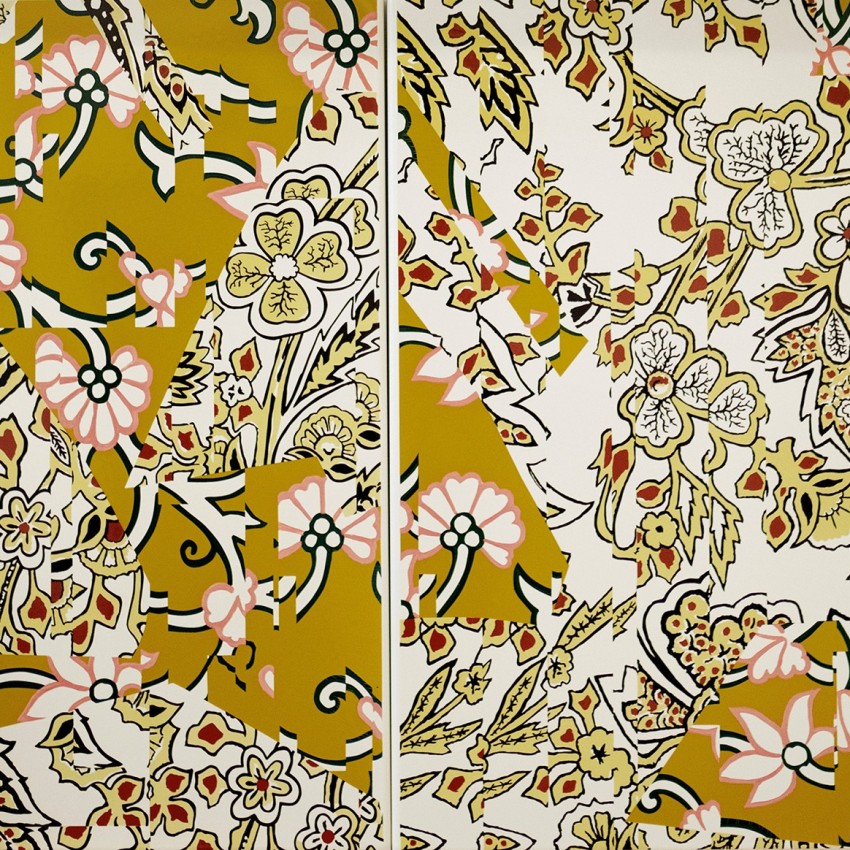
The Craft Edit The Craft Edit March 2026
Here at Craft Scotland we’re looking towards Spring and celebrating news and achievements from across Scotland’s craft sector. Read on to discover the latest awards, announcements, publications and projects.
23 Mar 2026